
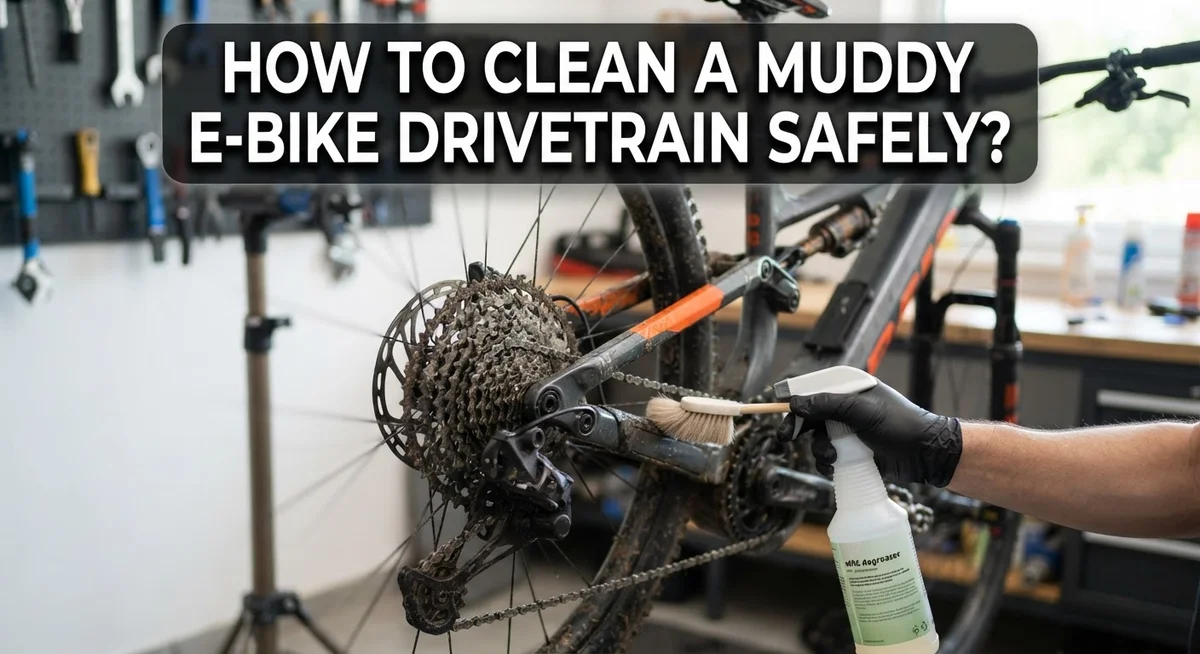
How to Clean a Muddy E-Bike Drivetrain Safely?
Mud happens. After a great trail ride, your e-bike drivetrain can look like it went through a swamp. A caked-up chain, cassette, and chainrings are not just ugly. They actually reduce your bike’s performance and wear out parts faster.
Cleaning an e-bike is a little different from cleaning a regular bike. You have a motor, a battery, and electrical connections to think about. One wrong move with a pressure washer can cause serious damage to those components.
The good news is that cleaning a muddy e-bike drivetrain safely is very doable. You just need the right steps and a little patience.
This guide walks you through everything you need to know. You will learn how to prepare your e-bike before washing, how to remove mud without harming electrical parts, and how to degrease and scrub the drivetrain properly.
By the end, your chain and cassette will be clean, well-lubricated, and ready for your next ride. Let’s get into it.
In a Nutshell
Here is a quick summary of what this guide covers:
-
Always turn off your e-bike before you start cleaning. Lock the battery in place and secure the charger port cap to keep water out of electrical components.
-
Never use a high-pressure washer on your e-bike. A gentle hose spray is all you need to rinse away mud safely.
-
Shift to the smallest gear before you begin. This gives you better access to the chain and makes scrubbing much easier.
-
Apply a cycle degreaser to the chain, chainrings, and cassette. Scrub with a soft bicycle brush, then rinse everything clean.
-
Spin the cranks while directing water at the chain. This helps rinse mud and degreaser out of every link evenly.
-
Lubrication is the final and most important step. Once the drivetrain is fully dry, apply chain lubricant. Skipping this step leaves your chain vulnerable to rust and wear.
Follow these steps in order and your drivetrain will stay in great shape ride after ride.
Why Cleaning Your E-Bike Drivetrain Is Different from a Regular Bike
E-bikes have electrical components that regular bikes don’t have. This means water and electricity cannot mix during cleaning. Your drivetrain still gets muddy and needs the same deep cleaning, but you must protect the battery, motor, and wiring first.
The main difference is electrical safety. A regular bike has no battery or motor to worry about. An e-bike has a rechargeable battery pack and electronic motor system. Water near these parts can cause short circuits, damage the battery, or create safety hazards.
Your e-bike drivetrain also works harder than a regular bike chain. The motor puts extra power through the chain, cassette, and chainrings. This means mud and grime stick faster and build up quicker. A muddy drivetrain on an e-bike reduces efficiency and can strain the motor more than on a regular bike.
Cleaning an e-bike requires a different approach from start to finish. You must turn off the bike completely before any water touches it. You need to secure the battery in place and protect the charger port. You cannot flip the bike upside down like you might with a regular bike because water could drip onto electrical connections.
The actual scrubbing process is similar to regular bikes. You still use degreaser, brushes, and gentle water flow. The key difference is your caution level throughout the entire process.
Lubrication matters more on e-bikes too. The extra power from the motor means a dry or poorly lubricated chain wears out faster. A regular bike might tolerate a slightly dry chain for a while. An e-bike drivetrain demands proper lubrication after every cleaning to perform well and last long.
Understanding these differences helps you clean safely and keep your e-bike running smoothly for years to come.
Essential Safety Precautions Before You Start
Before you touch your muddy e-bike drivetrain, you need to take several important safety steps. These precautions protect both you and your bike’s electrical system.
First, turn off your e-bike completely. This is the most critical step. Power down the motor and ensure the display screen goes dark. An active electrical system and water do not mix well together. Turning off the bike stops any accidental motor engagement while you work.
Next, secure your battery in place. Check that the battery is locked firmly into its mount. A loose battery can shift during cleaning and expose electrical connections to water spray. Take a moment to verify it sits flush against the frame.
Protect the charger port cap. Locate where you plug in your charger. Make sure this port has a protective cap in place. If you don’t have one, cover this opening with waterproof tape or a small plastic cover. Water entering this port can damage internal circuits.
Position your bike correctly. Never flip your e-bike upside down or lay it on its side during cleaning. This position allows water to drip into the motor housing, battery connectors, and other sensitive areas. Keep your bike upright on a work stand or kickstand.
Prepare your cleaning area. Choose a spot with good drainage so dirty water runs away from your bike. Avoid cleaning near electrical outlets or in areas where water splash could reach power sources.
Gather your supplies nearby. Have your cleaning tools, degreaser, and brushes ready before you start. This prevents you from leaving your wet bike unattended while you search for supplies.
These safety steps take just a few minutes but make an enormous difference in protecting your e-bike’s electrical components from water damage.
How to Prepare Your E-Bike for Drivetrain Cleaning
Before you tackle that muddy drivetrain, your e-bike needs proper setup. This prep work keeps both you and your bike safe during cleaning.
Start by finding a good location. Pick a spot with drainage so water flows away naturally. A garage corner, driveway, or outdoor area works well. Make sure you have room to move around the bike comfortably without bumping into walls or obstacles.
Gather all your supplies first. Collect your soft-bristled brushes, degreaser, hose, towels, and lubricant before you begin. Having everything within arm’s reach means you won’t need to leave your bike unattended mid-cleaning. This also prevents water from sitting on electrical components while you search for tools.
Check your battery security. Verify that your battery is locked firmly in its mount. Give it a gentle tug to confirm it won’t shift during cleaning. A loose battery can move into water spray and cause damage.
Protect your charger port. Locate the charging port on your frame or battery. If there’s a cap, make sure it’s sealed tightly. Some e-bikes have exposed ports, so keep your hose spray away from this area entirely.
Position your bike correctly. Keep your e-bike upright on its kickstand or in a repair stand. Never flip it upside down or lay it on its side. When a bike is inverted, water can seep into the motor, battery connections, and other electrical parts.
Turn off power completely. Switch off your e-bike’s motor and remove the battery if possible. This is your most important safety step. Even with the motor off, keeping the battery removed prevents accidental electrical issues during cleaning.
Once these steps are complete, your e-bike is ready for safe and effective drivetrain cleaning.
Step-by-Step Guide to Cleaning a Muddy E-Bike Drivetrain
Start by shaking off excess mud from your chain, cassette, and chainrings. Use your hand or a soft brush to remove large clumps gently. This step prevents mud from spreading into water during rinsing.
Next, use a gentle hose spray to rinse your drivetrain. Direct the water flow at a low pressure. Avoid high pressure washers as they can force water into sealed bearings and electrical components. Spin your cranks slowly while rinsing so water reaches all chain surfaces.
Shift to your smallest gear before applying degreaser. This position gives you better access to the chain and makes scrubbing more effective. Apply cycle degreaser directly onto your chain, cassette, and chainrings. Let it sit for a minute to break down the mud and grime.
Now scrub each component thoroughly. Use a soft bicycle brush with short, firm strokes on the chain. Work the brush between the cassette cogs to remove trapped mud. Don’t forget the chainrings at the front. Brush both the teeth and the inner surfaces where mud collects.
Rinse everything again with gentle water spray. Make sure you remove all degreaser residue and loosened mud. Spin your cranks while rinsing to flush out particles stuck in the chain links. Keep rinsing until the water runs clear.
Allow your drivetrain to dry completely before lubricating. Use a clean towel to wipe down all components. You can also let air dry for 15 to 20 minutes in good weather.
Finally, apply chain lubricant to your chain while slowly rotating the cranks. This step is essential for e-bikes since the motor puts extra strain on your drivetrain. Proper lubrication prevents rust and reduces wear on your components. Wipe away any excess lubricant with a clean cloth to avoid attracting dirt.
How to Safely Rinse and Dry the Drivetrain Without Damaging Electronics
Water and electricity don’t mix, so rinsing your e-bike drivetrain requires extra care. The key is keeping water away from electrical components while cleaning mud effectively.
Start with a gentle hose spray, not a high-pressure washer. High-pressure water can force moisture into motor seals, battery connections, and controller housings. Use a regular garden hose on a soft spray setting. Direct the water at your chain, cassette, and chainrings from the side, not straight into the motor or battery area.
Spin your cranks slowly while rinsing. This rotation helps water wash away mud from between chain links and around the cassette teeth. Work systematically from the top of your drivetrain down to the bottom. Let gravity help pull water away from sensitive electronics.
Avoid spraying directly at your motor hub, battery pack, or any visible electrical connectors. If your e-bike has a mid-drive motor, be especially careful around that area. Water pooling near the motor can cause serious damage.
After rinsing, drying becomes just as important as the washing itself. Use a clean, dry towel to wipe down your entire drivetrain. Pay special attention to the chain, which holds water in its links. Gently squeeze the towel around the chain while rotating the cranks.
Let your drivetrain air dry for at least 30 minutes in a dry location. Don’t rush this step. Moisture left behind can cause rust and corrosion on metal components.
Check that everything looks dry before applying lubricant. Water and chain oil don’t mix well. Wet chains won’t accept lubricant properly and can still rust underneath the oil.
Once completely dry, your drivetrain is ready for fresh lubrication. This final step protects all those clean metal surfaces from rust and keeps your chain running smoothly.
Re-Lubricating the Chain After Cleaning
After your drivetrain dries completely, lubrication becomes your final and most important step. Proper lubrication protects your chain from rust and ensures smooth pedaling. Skip this step and your chain will corrode quickly, especially after a muddy ride.
Start by positioning your bike so you can easily rotate the cranks. Spin the pedals backward slowly and steadily. This motion lets you apply lubricant evenly across every link of your chain.
Apply lubricant to the inside of your chain as it moves. The inside surface is where your chain does its work, so this area needs protection most. Use a small amount of lubricant on each link. Too much lubricant attracts dirt and creates a messy drivetrain faster than you’d expect.
Continue rotating the cranks for several full rotations after applying lubricant. This distributes the oil throughout your entire chain. Watch the chain move and make sure the lubricant spreads evenly from the front chainrings to the rear cassette.
Let your chain sit for a few minutes after lubrication. The oil needs time to penetrate and settle into the chain links. Wipe away any excess lubricant with a clean, dry cloth. Excess oil sitting on your chain surface will collect mud and dust during your next ride.
Check your cassette and chainrings for any remaining water droplets. Wipe these dry with your cloth. Any moisture left behind can cause corrosion on these metal components.
Rotate your cranks one more time to verify smooth operation. Your chain should move quietly without any grinding sounds. Proper lubrication creates a smooth, quiet drivetrain that performs well on every ride.
Your e-bike drivetrain is now clean, dry, and protected. Regular lubrication after each cleaning keeps your bike running reliably for years to come.
Common Mistakes to Avoid When Washing an E-Bike Drivetrain
Many riders make costly mistakes when cleaning their e-bike drivetrain. Understanding what to avoid protects both your bike and its electrical components.
Never use a high-pressure washer on your drivetrain. Water forced at high speed can penetrate motor seals and damage internal electronics. This water intrusion causes rust and electrical failures that are expensive to repair. Stick with a gentle hose spray instead.
Washing your e-bike upside down is another common error. This position allows water to flow directly into your motor hub and battery connections. Water pooling in these areas creates short circuits and corrosion. Keep your bike upright during the entire cleaning process.
Many people forget to secure their electrical components before washing. Your battery should stay locked in place, and the charger port cap must be sealed tight. These simple steps prevent water from entering sensitive areas.
Neglecting to turn off your e-bike before cleaning is risky. Moisture and active electrical systems create hazardous conditions. Always power down your bike completely before you start rinsing anything.
Skipping lubrication after cleaning is a mistake that damages your chain. A dry chain rusts quickly and wears faster. Your chain needs lubricant to protect it and ensure smooth shifting.
Spraying water directly at your motor hub or battery pack causes problems. Direct your water spray at the chain, cassette, and chainrings only. Avoid aiming water at any visible electrical connectors or sealed components.
Some riders use harsh degreasers that aren’t designed for bicycles. These products can damage paint, seals, and components. Choose cleaners made specifically for bicycles.
Finally, rushing the drying process leads to water damage. Allow at least 30 minutes of air drying in a dry location before applying any lubricant. Patience during this step saves you from future repairs and keeps your drivetrain working smoothly.
Final Thoughts
Cleaning a muddy e-bike drivetrain safely comes down to a few key habits done consistently.
Always turn off your e-bike before you start. Secure the battery, cap the charging port, and never rush through the process. These small steps protect your electrical components every single time.
The drivetrain is the hardest-working part of your e-bike. Mud, grit, and moisture break down your chain, cassette, and chainrings faster than normal wear. Regular cleaning extends the life of all these components significantly.
Gentle water pressure is always the right choice. A soft hose spray removes mud without pushing moisture into sensitive areas. High-pressure water and e-bike electronics are a dangerous combination.
Shifting to your smallest gear before cleaning gives you better access to every chain link. This simple habit makes scrubbing far more effective and saves you time.
Degreasing your chain, cassette, and chainrings removes the sticky buildup that traps dirt. Apply your degreaser, scrub thoroughly with a bicycle brush, and rinse everything clean. Never skip the scrubbing step.
Drying matters just as much as washing. Let your drivetrain air dry completely before applying any lubricant. Water left under chain oil causes rust and accelerates wear.
Lubrication is the final step that locks in all your hard work. A well-lubricated chain runs quietly, shifts smoothly, and resists corrosion between rides.
Consistency is what separates riders who replace drivetrains frequently from those who don’t. Cleaning after every muddy ride keeps grit from grinding away at your components.
Your e-bike is an investment worth protecting. A clean drivetrain improves performance, reduces repair costs, and keeps your ride feeling smooth. Follow these steps every time, and your drivetrain will reward you with reliable, long-lasting performance on every single ride.
Frequently Asked Questions
Is it safe to use a garden hose to rinse my e-bike drivetrain?
Yes, a garden hose is safe if you use a gentle spray setting. Keep the water pressure low and steady. Never switch to a high-pressure nozzle or power washer. High pressure forces water into motor seals and electrical connections. This damages your e-bike’s motor and battery. A soft spray removes mud without harming sensitive parts.
Can I clean my e-bike drivetrain while it’s upside down?
No, avoid this completely. Flipping your e-bike upside down allows water to flow directly into the motor housing. This creates a path for moisture to reach electrical components. Always keep your e-bike upright during cleaning. Position it on a stand so you can rotate the cranks easily.
What should I do if water gets inside the motor?
Stop cleaning immediately and turn off your e-bike. Do not charge it or ride it. Let the motor dry completely in a warm, dry space for at least 24 hours. If water damage persists, contact a professional e-bike technician. Prevention is easier than repair, so always keep your e-bike upright while washing.
Do I need to shift gears before cleaning the chain?
Yes, shift to your smallest gear first. This position gives you better access to every chain link. You can scrub more effectively and reach areas that are harder to clean in other gear positions. Rotate your cranks gently while scrubbing to expose different sections of the chain.
Why is lubrication important after cleaning?
A dry chain rusts quickly and wears faster than a lubricated one. After rinsing and drying, apply chain lubricant to protect metal surfaces. Rotate your cranks several times to distribute the lubricant evenly. This step prevents corrosion and keeps your drivetrain running smoothly.

Virat is the founder and lead writer at ActivePlayFinds.com, where he shares honest, in-depth reviews, comparisons, and buying guides to help athletes and sports enthusiasts find the perfect gear. With a deep passion for sports and hands-on experience testing a wide range of products, he is committed to helping readers make smart, confident buying decisions.


