
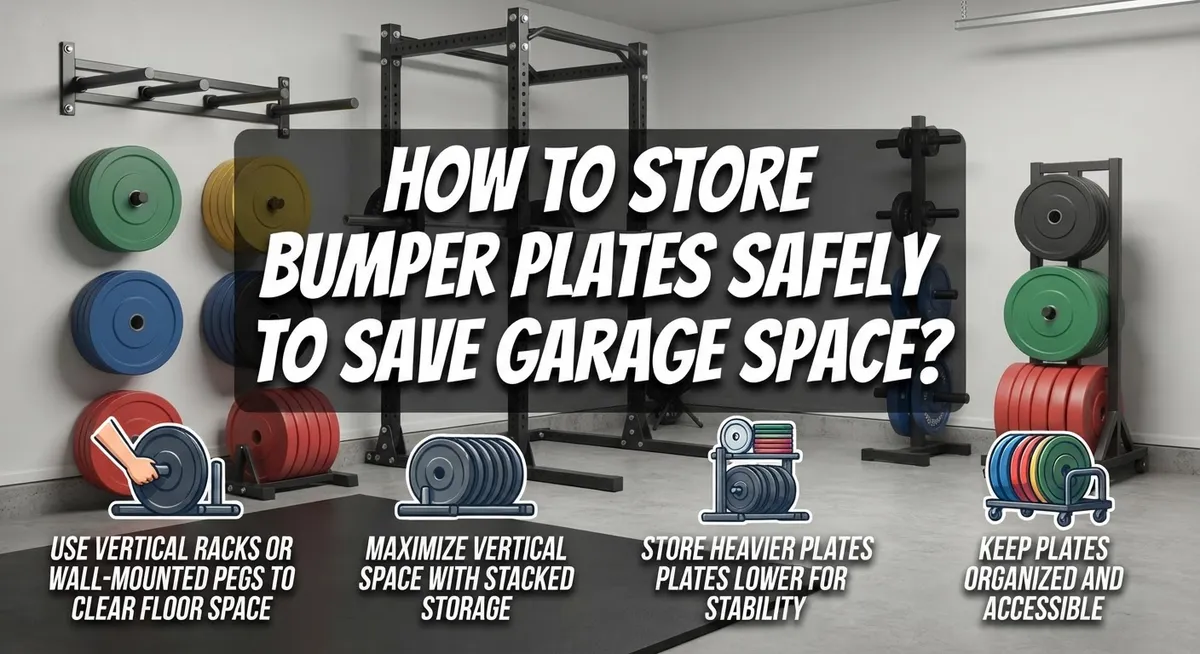
How to Store Bumper Plates Safely to Save Garage Space?
Bumper plates take up a lot of room. They pile up fast and turn your garage gym into a cluttered mess.
Left on the floor, they also become a real trip hazard. Nobody wants to trip over a 45 pound plate during a workout.
The good news? You can fix this problem with smart storage choices. Getting plates off the floor saves space and keeps your gym safer.
This guide covers everything you need to know about storing bumper plates the right way. We will look at rack mounted pegs, wall hooks, and simple DIY racks you can build yourself.
You will also learn why safety end caps matter so much. These small pieces stop plates from sliding off and causing injury.
We will walk through the key steps for setting up your storage system. This includes organizing plates by weight and type for easy access.
Plus, we cover common mistakes people make. This way, you can avoid them from the start.
By the end, you will know exactly how to keep your garage tidy and your workouts safe. Let’s get your bumper plates off the floor and onto a system that works.
In a Nutshell
Here’s the quick version if you’re short on time.
-
Get plates off the floor. This is the single best way to free up garage space and cut down on clutter.
-
Choose a storage method that fits your space. You can install rack mounted pegs, use simple wall hooks, or build a custom DIY rack with your own materials.
-
Always add safety end caps. These small pieces stop plates from sliding off pegs or hooks. They keep your workout area safe for everyone.
-
Organize plates by weight and type. This makes your setup look neat and helps you grab the right plate fast during a workout.
-
Check your mounting strength. Make sure your wall or rack can handle the total weight before you load it up. This prevents damage and keeps things secure.
-
Avoid common slip ups. Don’t skip the end caps, and don’t leave plates piled on the ground. These small mistakes lead to big headaches later.
Follow these points, and you’ll have a safer, more organized garage in no time.
Why Proper Bumper Plate Storage Matters
Proper bumper plate storage protects your investment and keeps your gym space functional. When plates sit on your garage floor, they create real safety risks. Someone could trip over them during a workout or while moving around your space.
Storing plates correctly also extends their lifespan. Bumper plates left on concrete absorb moisture and can develop cracks over time. Vertical storage keeps them dry and prevents this damage from happening.
Space efficiency matters too. A garage floor covered with plates wastes valuable real estate. You lose room for your car, other equipment, and moving around safely. Wall mounted or rack attached storage systems can reduce your floor footprint by up to 80 percent.
Organization becomes easier when you store plates properly. You can quickly find the weight you need without digging through a pile. This saves time between sets and keeps your workouts flowing smoothly.
Safety end caps are critical for storage success. These small pieces prevent plates from sliding off pegs or hooks unexpectedly. A falling bumper plate can cause serious injury or damage your equipment.
Proper mounting systems also protect your walls and equipment racks. The right installation spreads weight evenly across your mounting surface. Poor mounting can lead to wall damage, bent pegs, or equipment failure.
Finally, good storage habits keep your gym looking professional. A clean, organized space motivates better workouts. You feel more focused when everything has its place.
The bottom line? Investing time in proper storage now prevents problems later. You avoid injuries, protect your equipment, save space, and create a better workout environment. These benefits make storage setup well worth the effort.
Types of Bumper Plate Storage Systems
Bumper plate storage systems come in several practical options. Each type works differently based on your garage setup and budget.
Rack mounted plate pegs attach directly to your weight rack or power rack. These pegs slide into the existing holes on your rack frame. You simply load plates onto the pegs from the side. This method saves floor space and keeps plates right next to your lifting area. Rack mounted pegs work best if you already own a sturdy rack.
Wall hooks offer a simple alternative for garage storage. You can find these at any hardware store in various sizes. Wall hooks mount directly to your garage wall studs. They hold plates vertically or horizontally depending on the hook design. This option works great for smaller garages where floor space is tight.
Custom DIY racks give you total control over your storage design. You can build a simple frame using basic materials from a hardware store. Add pegs or hooks to the frame at whatever height works for you. DIY racks let you customize the size to fit your exact space.
Plate trees and stands are compact storage units that stand on the floor. These hold multiple plates in a circular or vertical arrangement. They take up less floor space than loose plates scattered around. Plate trees work well for garages with limited wall space.
Horizontal storage bars let you slide plates onto a bar like a barbell. These bars mount to walls or racks horizontally. You can stack multiple bars at different heights. This method maximizes vertical space in your garage.
The best system depends on your garage layout, available wall space, and the number of plates you own. Consider your mounting options first. Check whether your walls can support the weight. Measure your space before choosing a storage method. This planning step prevents mistakes and ensures your system works long term.
Step-by-Step: Installing a Wall-Mounted or Rack Storage System
Installing a wall mounted or rack storage system starts with choosing your location. Pick a spot that’s easy to access during workouts but won’t block doorways or walkways. The wall should be sturdy enough to hold the total weight of all your plates combined.
Measure the space carefully before you begin. Mark where you want your pegs or hooks to go using a level and pencil. Make sure the spacing between pegs matches the width of your bumper plates so they sit properly without wobbling.
Use a stud finder to locate wall studs if you’re mounting directly to drywall. Studs provide the strongest anchor points for heavy loads. Drill pilot holes first, then install your mounting hardware according to the manufacturer’s instructions. If studs aren’t available in your preferred location, use heavy duty wall anchors rated for your plate weight.
For rack mounted systems, simply slide the peg attachments onto your existing rack frame. Tighten all bolts securely so nothing shifts when you load plates. Double check that everything is tight before adding any weight.
Once your mounting system is in place, install safety end caps on both sides of each peg. These caps prevent plates from sliding off accidentally. Some end caps screw on, while others slide into place. Make sure they’re snug and won’t come loose with repeated use.
Test your installation with a light load first. Load a few plates and check for any movement or wobbling. If everything feels stable, you can proceed with full loading.
Organize your plates by weight on the pegs. This makes grabbing the right plate quick and easy during training. Label each section if you have multiple plate types. Your system is now ready to keep your garage organized and your plates safely stored off the floor.
Organizing Plates by Weight and Type for Easy Access
Organizing plates by weight and type keeps your gym space efficient and safe. When you arrange plates strategically, you save time during workouts and prevent confusion about which weights you’re grabbing.
Start by grouping all plates into weight categories. Put your heaviest plates on one side of your storage system and lighter plates on the other. This visual separation makes it instantly clear where everything belongs.
Color coding helps tremendously here. Most bumper plates come in standard colors that represent specific weights. Red plates are typically 25 pounds, blue plates are 20 pounds, yellow plates are 15 pounds, and green plates are 10 pounds. White plates represent smaller increments. When you store plates by these colors, you create a natural organization system that anyone can understand.
Consider your workout routine when deciding placement. Put the weights you use most frequently at eye level or within easy reach. Reserve higher or lower spots for plates you grab less often. This reduces unnecessary bending and stretching during your training sessions.
Separate bumper plates from iron plates if you have both types. Bumper plates handle drops and impacts better, while iron plates need gentler treatment. Storing them apart prevents accidental damage and keeps your equipment in better condition longer.
Label your storage pegs or hooks with weight amounts using simple markers or stickers. This extra step takes minutes but saves confusion when multiple people use your gym space.
Keep a quick inventory system. Know exactly how many plates of each weight you own. This prevents overloading storage pegs beyond their weight capacity and helps you notice if equipment goes missing.
Group pairs together when possible. Most exercises require matched plates on both sides of a barbell, so keeping pairs organized streamlines your setup process. Your storage system becomes faster and more intuitive when everything has a designated spot based on weight and type.
Essential Safety Practices for Stored Plates
Safety matters when you store bumper plates. Proper storage prevents injuries and keeps your garage organized.
Start by securing your end caps firmly on all storage pegs. These caps stop plates from sliding off unexpectedly. Check them regularly to ensure they stay tight. Loose caps create serious hazards when someone bumps the storage system.
Mount your storage system to sturdy surfaces only. Use wall studs when installing wall mounted solutions. For rack systems, make sure your rack can handle the total weight of all plates you plan to store. An unstable mounting system fails under pressure and causes plates to fall.
Keep plates completely off the garage floor. Floor storage creates trip hazards and wastes valuable space. Your family members or guests could stumble over plates left sitting around.
Inspect your storage setup monthly. Look for signs of rust, loose bolts, or bent pegs. Replace damaged components right away. A small problem now prevents a major accident later.
Never overload a single peg or hook. Distribute weight evenly across your entire storage system. Check the weight capacity limits of your chosen method. Exceeding these limits causes structural failure.
Store heavier plates at lower positions on your system. This keeps your center of gravity lower and improves stability. Lighter plates can go higher without creating balance problems.
Keep your storage area clear of clutter. Remove items that block access to your plates. A clean storage space helps you grab plates safely without reaching around obstacles.
Test your system before loading it fully. Start with a few plates and gradually add more. Watch for any movement or shifting. If something feels unstable, fix it before adding the full load.
Use proper lifting techniques when removing plates from storage. Bend your knees and keep your back straight. Never twist your spine while holding heavy plates. These simple habits prevent back injuries during your workout routine.
Common Storage Mistakes and How to Avoid Them
Many people make simple mistakes when storing bumper plates. These errors waste space and create safety problems in your garage.
Leaving plates on the floor is the biggest mistake. Floor storage takes up valuable space you could use for other equipment or activities. Plates sitting on concrete also collect dust and moisture. They become trip hazards when people walk through your gym area. Your plates can get damaged from being stepped on or rolled over accidentally.
Another common error is skipping safety end caps on storage pegs. Without end caps, plates slide off easily when you grab one from the middle. This creates a dangerous situation where heavy plates fall on your feet or damage your floor. End caps keep plates secure and prevent accidental removal.
Many people also mount their storage systems incorrectly. Using drywall anchors instead of wall studs causes the entire system to fail under weight. Your plates could crash down unexpectedly. Always locate studs before mounting anything to your walls. For rack systems, check that pegs are fully inserted and locked in place.
Overloading single pegs is another frequent problem. Each peg has a weight limit based on its design and material. Stacking too many plates on one peg bends it permanently or causes failure. Distribute your plates evenly across multiple pegs instead.
Some people also fail to separate bumper plates from iron plates during storage. Mixing these types makes organizing difficult and wastes space. Bumper plates need different handling than iron plates anyway.
Finally, people often skip regular inspections of their storage systems. Monthly checks catch loose bolts, bent pegs, or damaged end caps before they cause accidents. A quick look takes just minutes and keeps your setup safe.
Avoiding these mistakes keeps your garage organized, safe, and efficient.
Maximizing Garage Space with Smart Layout Planning
Smart layout planning makes your garage work harder for you. The key is thinking about your space like a puzzle where every inch counts.
Start by measuring your garage walls and identifying which surfaces can hold weight. Sturdy wall studs are your best friends here. Most storage systems need solid backing to handle the weight of multiple bumper plates safely. Mark these stud locations before you plan anything else.
Next, think about traffic flow. You want your plate storage positioned where people won’t trip over it or bump into it constantly. Keep storage systems away from doorways and main walking paths. This keeps your garage functional and accident free.
Consider the height of your storage placement carefully. Eye level access works best for plates you use regularly. Heavy plates go lower on your system. Lighter plates can go higher up. This arrangement prevents strain when grabbing what you need.
Plan for future growth too. If you think you’ll add more plates later, leave extra peg space on your storage system. This saves you from installing another system down the road.
Think about what else lives in your garage. Your plate storage shouldn’t block access to tools, cars, or other equipment. Create zones in your garage. One zone for fitness equipment, one for tools, one for seasonal items. This organized approach maximizes every square foot.
Distance matters between your storage system and workout areas. You want quick access without cluttering your exercise space. Usually 3 to 4 feet away works well.
Finally, ensure adequate lighting near your storage area. You need to see plate weights clearly when selecting them. Good lighting also helps you spot any issues with your storage system during monthly inspections.
Smart planning upfront saves frustration later. Take time to map everything out before installing anything permanent.
Final Thoughts
Storing bumper plates safely does not need to be complicated. A little planning turns a messy garage floor into an organized, functional space. Your gym area becomes safer and more enjoyable to use.
Pick a storage method that fits your garage and your budget. Wall mounted pegs work well for smaller collections. Freestanding racks suit larger plate sets with room to grow.
Whatever system you choose, safety should guide every decision. Sturdy mounting, proper end caps, and weight limits protect both your plates and your family.
Remember that good storage saves more than space. It saves time too. You spend less time stepping around plates and more time actually training.
Small changes make a big difference. Moving plates off the floor opens up room for other equipment. It also makes your garage look more put together.
Think of your storage setup as part of your fitness routine, not separate from it. A tidy space encourages consistency. When equipment is easy to reach and put away, workouts feel less like a chore.
Do not rush the setup process. Take time to measure your space, check your wall studs, and test your system before adding all your plates. This patience pays off later.
Every garage gym looks different. Your storage solution should match your specific needs, not someone else’s setup. Adjust as your collection grows or your space changes.
Bumper plate storage is not just about tidiness. It is about creating a safer, smarter workout environment for years to come.
Start with one small change today. Add an end cap, mount a single peg, or clear one section of floor. These small steps lead to a garage gym that works better for you every single day.
Frequently Asked Questions
What is the best way to mount bumper plates on a wall?
Wall mounting works well for small to medium plate collections. Use heavy duty anchors rated for your total plate weight. Install horizontal pegs or hooks at chest height for easy access. Make sure each mounting point can handle the load you plan to place on it.
Space pegs about 12 to 18 inches apart so plates sit comfortably without touching. Add safety end caps to both sides of each peg. These caps stop plates from sliding off accidentally. Test the system with lighter plates first before adding your full collection.
Can I stack bumper plates horizontally on a single peg?
Yes, stacking works when you use proper end caps. Stack plates with the smallest diameter on the outside for stability. Keep the total weight under what the peg can support. Most pegs handle 200 to 300 pounds, but check your specific system.
Add end caps on both sides to keep plates secure. Never remove caps while plates are loaded. This prevents accidental spills and injuries.
How do I organize plates by weight on my storage system?
Arrange heavier plates at waist level and lighter ones higher up. This reduces strain when grabbing plates during workouts. Group plates by type: bumper plates on one section, iron plates on another. Label each peg with weight amounts so you grab the right plate quickly.
Should I use a dedicated rack or wall storage?
Both options work. Wall storage saves floor space and costs less to set up. Racks take up more room but hold larger collections. Choose based on your garage size and how many plates you own. Either way, secure everything properly for safety.

Virat is the founder and lead writer at ActivePlayFinds.com, where he shares honest, in-depth reviews, comparisons, and buying guides to help athletes and sports enthusiasts find the perfect gear. With a deep passion for sports and hands-on experience testing a wide range of products, he is committed to helping readers make smart, confident buying decisions.


