
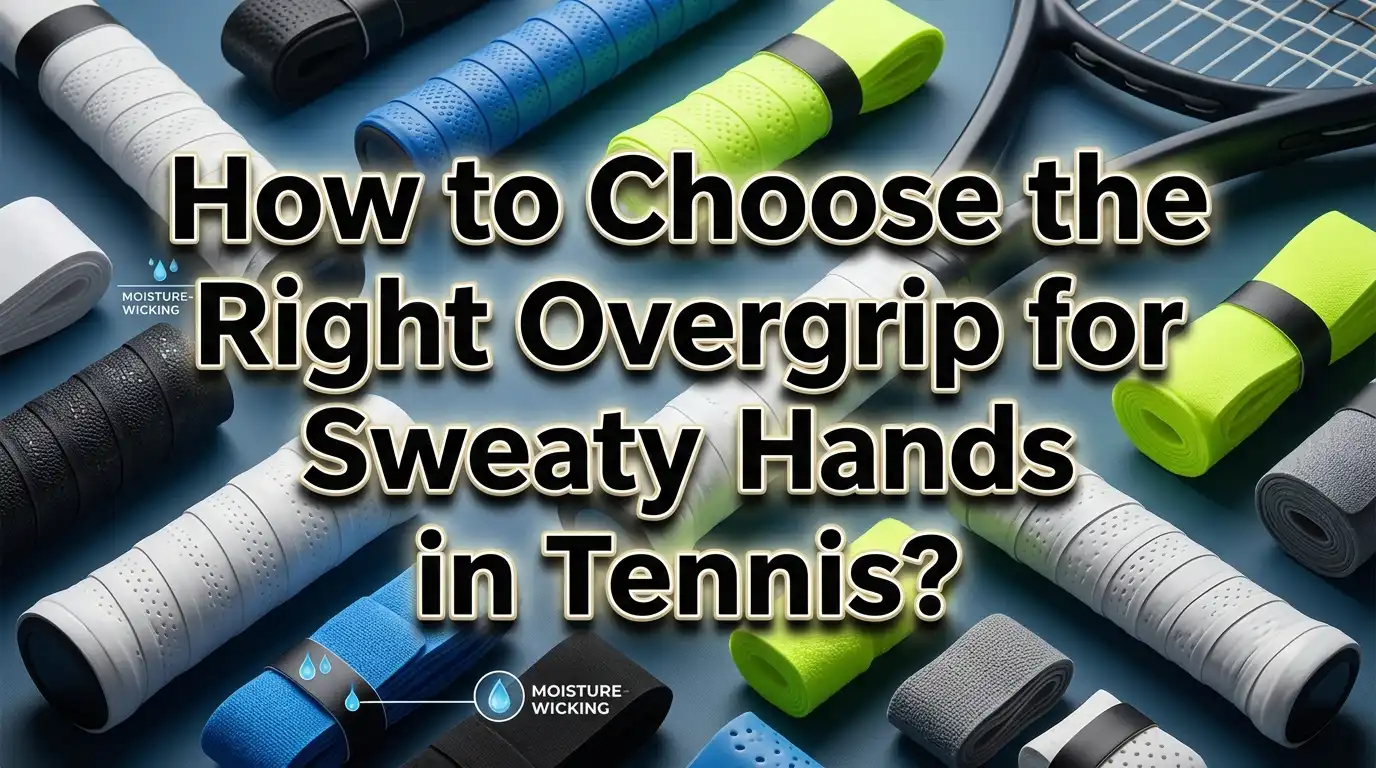
How to Choose the Right Overgrip for Sweaty Hands in Tennis?
Sweaty palms and a slippery racket handle can ruin the best tennis match of your life. You line up a forehand, swing with full force, and the racket almost flies out of your hand. Sound familiar? You are not alone. Millions of tennis players struggle with excessive hand sweat, and the wrong overgrip makes the problem ten times worse. A tacky overgrip that works perfectly in cool weather can turn into a slick, useless strip of tape the moment humidity rises.
The good news? The right overgrip can transform your game. It can give you a locked in feel even on the hottest summer days and help you play with full confidence. But the market is flooded with options, and each brand claims to be the best. Dry grips, tacky grips, perforated grips, thick grips, thin grips — the choices are endless.
This guide will walk you through every factor you need to consider, from material types and thickness to climate conditions and replacement schedules. By the end, you will know exactly which overgrip suits your sweaty hands and how to keep your racket locked in your palm no matter the weather.
Key Takeaways
Dry overgrips outperform tacky overgrips for sweaty hands. Dry overgrips are made from materials that absorb moisture and actually grip better as your hands get wetter. Tacky overgrips lose their stickiness once sweat builds up and can become dangerously slippery mid match.
Overgrip thickness matters more than you think. Standard overgrip thickness ranges from 0.45mm to 0.75mm. Thicker overgrips add cushion and absorb more sweat, while thinner options preserve the natural feel of the racket handle and its bevels.
You should replace your overgrip every 6 to 10 hours of play. Sweaty hands wear down overgrips faster than dry hands. If your overgrip feels smooth, shiny, or slick, it has lost its effectiveness and needs immediate replacement.
Perforated overgrips improve airflow and help manage moisture. The small holes in perforated overgrips promote ventilation and wick sweat away from the surface, keeping your hands cooler and drier during long matches.
Accessories like wristbands and rosin bags can supplement your overgrip. No overgrip alone can handle extreme perspiration. Pairing your grip with sweat absorbing wristbands and a rosin bag creates a complete moisture management system.
Climate and playing conditions should guide your choice. A player in Arizona’s dry heat has different needs than a player in Florida’s humid summers. Always match your overgrip to the conditions you play in most often.
Understanding Why Sweaty Hands Affect Your Tennis Game
Sweat on your palms creates a thin layer of moisture between your skin and the racket handle. This reduces friction and makes the racket rotate or slip during your swing. Even a small amount of slippage changes the angle of the racket face at contact. The result is inconsistent shot placement and reduced power.
Your grip pressure also increases when your hands feel slippery. You squeeze harder to compensate, which leads to forearm fatigue, tension in your wrist, and even tennis elbow over time. A relaxed grip is essential for generating racket head speed, and a slippery handle makes relaxation impossible.
Some players naturally sweat more than others due to a condition called hyperhidrosis. But even players with average sweat production will struggle in hot and humid environments. Humidity prevents sweat from evaporating, so moisture accumulates faster on the grip surface. This is why an overgrip that works fine in spring might fail completely in July.
The psychological impact is real too. If you do not trust your grip, you will hesitate on your shots. You might avoid going for big serves or aggressive forehands because you fear the racket slipping. Choosing the right overgrip eliminates that mental barrier and lets you play freely.
Dry Overgrips vs Tacky Overgrips: Which Is Better for Sweat?
This is the most important decision for players with sweaty hands. Tacky overgrips have a sticky surface that feels secure when your hands are dry. Popular examples include the Wilson Pro Overgrip and the Yonex Super Grap. They provide excellent grip right out of the package and feel comfortable during casual play.
However, tacky overgrips have a major weakness. Once moisture builds up on the surface, that sticky layer becomes slippery. The tackiness traps sweat instead of absorbing it, and your hand slides across the grip. Many players describe this as a soapy or greasy feeling.
Dry overgrips take the opposite approach. They feel slightly rough or papery when new and do not have that instant sticky sensation. But they absorb sweat into the material itself. The more you sweat, the better they grip. The Tourna Grip Original is the most famous dry overgrip and has been used by professional players like Pete Sampras for decades.
Pros of Dry Overgrips: They absorb moisture, they grip better as hands get wetter, and they perform well in hot and humid conditions. Cons of Dry Overgrips: They feel unusual at first, they wear out faster than tacky grips, and they can feel too rough for players with sensitive skin.
Pros of Tacky Overgrips: They feel secure immediately, they last longer on average, and they suit cool and dry conditions. Cons of Tacky Overgrips: They lose grip when wet, they become slippery with heavy sweat, and they can leave sticky residue on your hand.
For sweaty hands, dry overgrips are the clear winner in most situations.
The Role of Overgrip Material in Moisture Management
The material of your overgrip determines how well it handles sweat. Understanding what goes into each type helps you make a smarter purchase.
Polyurethane (PU) is the most common material used in tacky overgrips. It provides a soft, elastic surface that feels smooth under your fingers. PU grips offer good comfort and durability. However, PU does not absorb moisture well. It repels water to some degree, which is why tacky PU grips become slippery with sweat.
Cotton and felt based overgrips are excellent at wicking moisture away from your skin. These materials pull sweat into the fibers and spread it across a larger surface area for faster evaporation. The Tourna Grip uses a proprietary cellulose based material that functions similarly to cotton. It gets slightly damp but never slippery.
Synthetic blends and advanced polymers aim to combine the best of both worlds. Some newer overgrips use materials that offer moderate tackiness while still absorbing moisture. The Yonex Dry Grap and the Solinco Heaven Grip fall into this category. They provide a bit of tack along with meaningful sweat absorption, making them versatile choices for players who sweat moderately.
Your choice of material should match your sweat level. Light sweaters can get away with PU tacky grips. Moderate to heavy sweaters should lean toward cotton, felt, or advanced synthetic dry grips.
How Overgrip Thickness Impacts Comfort and Control
Overgrip thickness ranges from 0.45mm on the thin end to 0.75mm on the thick end. This might sound like a tiny difference, but you will feel it in your hand immediately.
Thicker overgrips (0.6mm to 0.75mm) add more cushion to the handle. They absorb vibrations, reduce hand fatigue, and provide a softer feel. For sweaty players, thicker grips also tend to absorb more moisture because they contain more material. Grips like the HEAD Prime Tour fall into this category and are popular among players who want comfort and moisture management in one package.
Thinner overgrips (0.45mm to 0.55mm) preserve the original shape and bevels of your racket handle. This matters because the bevels help you feel the racket’s orientation in your hand. Thin grips give you better feedback and more precise control over your shots. The Babolat VS Original is one of the thinnest overgrips available and is loved by players who prioritize feel.
There is a tradeoff here for sweaty players. Thicker grips absorb more sweat but reduce feel. Thinner grips offer better control but may not manage moisture as well. A good middle ground is an overgrip around 0.55mm to 0.6mm, which gives you both reasonable absorption and decent feel.
Also remember that each overgrip layer adds to your overall grip size. If your handle is already at the upper limit of your preferred size, a thick overgrip might make it too large to hold comfortably.
Perforated Overgrips: Do They Actually Help?
Perforated overgrips have small holes punched throughout the surface. These holes serve two primary purposes: they increase airflow around your hand and they allow moisture to pass through the grip rather than pooling on the surface.
The idea behind perforated grips is simple. Better ventilation means less heat buildup, and less heat means less sweat production. The holes also create tiny channels where sweat can escape, preventing that slippery film from forming between your palm and the grip.
In practice, perforated overgrips do help with moisture management. Players report that their hands feel cooler and drier during long rallies. The Wilson Pro Overgrip Perforated is a popular option that offers the same tacky feel as the standard Wilson Pro but with added breathability.
Pros of Perforated Overgrips: Improved airflow, reduced surface moisture, cooler feel during play. Cons of Perforated Overgrips: Slightly less cushioning due to removed material, the holes can feel uneven under sensitive fingers, and they may not be enough for extremely heavy sweaters.
Perforated grips work best as a supplementary feature rather than a standalone solution. If you combine a perforated design with a dry or absorbent material, you get the best of both approaches.
Popular Overgrip Options for Sweaty Hands
Several overgrips have earned strong reputations among sweaty handed players. Here is what you need to know about the most talked about options.
Tourna Grip Original is the gold standard for sweaty hands. It uses a unique dry material that becomes grippier with moisture. Many professional players have relied on it for decades. It is thin, firm, and performs exceptionally in humid conditions. The downside is its shorter lifespan and rough texture.
Yonex Dry Grap has emerged as a top competitor. It offers a soft, dry feel with excellent sweat absorption. Many players find it more comfortable than Tourna Grip while providing similar moisture management. Tests by experienced players consistently rank it among the best for humid conditions.
Solinco Heaven Grip provides a middle ground between dry and tacky. It has a slightly textured surface that absorbs moisture well and offers moderate tack. It is widely available and often cheaper in bulk, making it a practical choice for players who change grips frequently.
HEAD Prime Tour offers a thicker, more cushioned feel with good absorption. It suits players who want comfort alongside moisture control. It does not absorb sweat as aggressively as Tourna Grip or Yonex Dry Grap, but it provides a more familiar feeling for players transitioning from tacky grips.
Wilson Pro Overgrip remains the best selling overgrip in the world. While it is tacky and not ideal for extreme sweat, many players use it in combination with a rosin bag or wristbands. Its comfort and durability make it a solid choice for light to moderate sweaters.
How Climate and Weather Should Influence Your Choice
Your local weather plays a huge role in overgrip performance. A grip that feels perfect indoors might fail completely on an outdoor court in summer.
Hot and humid conditions are the worst scenario for sweaty hands. High humidity means your sweat cannot evaporate efficiently, so moisture accumulates on the grip surface faster. In these conditions, you need a dry, absorbent overgrip like the Tourna Grip or Yonex Dry Grap. Tacky grips will fail quickly in this environment.
Hot and dry conditions are somewhat easier to manage. Sweat evaporates faster in low humidity, so even tacky grips can hold up longer. However, the heat still increases sweat production. A perforated tacky grip or a synthetic blend can work well here.
Cool and dry conditions present the least challenge for sweaty hands. Your sweat production drops, and evaporation is efficient. This is where tacky grips shine. A Wilson Pro Overgrip or Yonex Super Grap will give you excellent hold with great comfort.
Indoor courts typically have controlled temperatures, but they can still get warm during intense play. A versatile overgrip that offers moderate tackiness and some absorption works best for indoor players. Consider a Solinco Heaven Grip or a perforated option.
If you play in different conditions throughout the year, keep two types of overgrips in your bag. Use dry grips for summer and tacky grips for cooler months.
How to Apply Your Overgrip for Maximum Performance
Proper application makes a real difference. Even the best overgrip will underperform if wrapped poorly.
Start by removing the old overgrip completely. Peel off any remaining adhesive residue and wipe the handle with a damp cloth. Let it dry fully before applying the new grip. Leftover moisture or residue under the new overgrip will cause it to shift during play.
Begin at the base of the handle with the tapered end of the overgrip. Most overgrips come with a pointed or angled starting piece. Peel the backing off the adhesive strip and press it firmly against the bottom edge of the handle.
Wrap in smooth, overlapping spirals with about a 1/8 inch (3mm) overlap. Keep consistent tension as you go. Too loose and the grip will bunch up and shift. Too tight and it will stretch thin and tear. Aim for a firm but not strained wrap.
Finish at the top of the handle and cut off any excess. Use the finishing tape provided with the overgrip to secure the end. Press the tape down firmly and smooth out any wrinkles.
One important tip for sweaty players: do not overlap too much. Excessive overlap adds thickness and creates ridges that trap moisture. A thinner, smoother wrap promotes better airflow and keeps the grip surface more uniform under your palm.
Accessories That Help Manage Sweat Alongside Your Overgrip
No overgrip can do the job alone in extreme conditions. Smart accessories make a significant difference.
Wristbands are the simplest and most effective accessory. They catch sweat running down your forearm before it reaches your hand. Wear one on each wrist during practice and matches. This alone can reduce the moisture reaching your grip by a noticeable amount.
Rosin bags are small pouches filled with rosin powder. You squeeze the bag to release a fine, dry powder onto your hands. Rosin absorbs moisture and creates a tacky, dry layer on your skin. The Tourna Rosin Bag is a popular option among tennis players and is legal to use during matches. Keep one in your bag and apply it during changeovers.
Grip powder and chalk work on the same principle as rosin. They absorb sweat and create friction. Some players prefer liquid grip enhancers that dry into a tacky film. These products offer a few hours of sweat protection and can be applied before warming up.
Towels are essential. Keep a small towel at the back fence or on your chair. Wipe your hands and racket handle during every changeover. This simple habit removes accumulated moisture and gives your overgrip a chance to dry slightly.
Carrying multiple rackets is another strategy used by professionals. When one grip gets too wet, you switch to a fresh racket. If you have two rackets with identical setups, rotating between them gives each grip time to dry.
How Often Should You Replace Your Overgrip?
For players with sweaty hands, overgrip replacement needs to happen more frequently than for dry handed players. Moisture breaks down overgrip materials faster, reducing absorption capacity and surface texture.
A general guideline is to replace your overgrip every 6 to 10 hours of play. If you sweat heavily, lean toward the lower end of that range. Some competitive players change their overgrip before every match. Recreational players who play two or three times per week should change theirs weekly.
Visual and tactile cues tell you when it is time. If the surface looks shiny or smooth, the grip has lost its texture. If it feels slick even before you start sweating, it is done. Discoloration and fraying at the edges are also clear signs of wear.
Do not try to extend the life of a worn overgrip. A dead overgrip is worse than no overgrip at all because it creates a false sense of security. You think you have grip, but the surface has no friction left. This leads to the racket twisting in your hand at the worst possible moment.
Buying overgrips in bulk saves money. Most brands sell packs of 10, 12, or 30 at lower per unit prices. If you know which overgrip works for you, stock up and change frequently. Fresh grips are one of the cheapest ways to improve your game instantly.
Step by Step Process for Choosing Your Ideal Overgrip
Follow this process to find the right overgrip for your specific situation.
Step 1: Assess your sweat level honestly. Are your hands damp after a few games, or are they dripping within the first ten minutes? Light sweaters have more options. Heavy sweaters should focus exclusively on dry and absorbent overgrips.
Step 2: Consider your playing environment. Check the average temperature and humidity where you play most often. Hot and humid environments demand dry overgrips. Cool and dry conditions allow tacky options.
Step 3: Decide on your preferred thickness. If you value comfort and cushion, choose a thicker grip (0.6mm or more). If you prefer feel and precision, go thinner (0.5mm or less). Check your current grip size to make sure adding an overgrip does not push it beyond your comfort zone.
Step 4: Try at least three different overgrips. Buy small packs or single grips from different brands. Test each one during actual play, not just by holding the racket at home. Pay attention to how the grip feels after 30 minutes of active play when your hands are warm and moist.
Step 5: Evaluate performance over multiple sessions. One session is not enough. Use each overgrip for at least two or three sessions to get a fair assessment. Note how long the grip maintains its effectiveness before it feels worn.
Step 6: Commit to your choice and stock up. Once you find the right overgrip, buy in bulk and establish a regular replacement schedule. Keep fresh grips in your tennis bag at all times.
Common Mistakes Players Make With Overgrips
Many players unknowingly sabotage their grip performance through simple mistakes.
Using a tacky overgrip in humid conditions is the number one error for sweaty players. Tacky grips feel great at first, but they fail quickly once moisture builds up. If you sweat heavily and keep reaching for tacky grips because they feel good initially, you are setting yourself up for problems mid match.
Waiting too long to replace the overgrip is another common mistake. Players get used to the feel of a worn grip and do not notice the gradual decline in performance. Set a reminder based on hours played rather than waiting for the grip to feel completely dead.
Wrapping too tightly or too loosely affects both comfort and durability. A tight wrap stretches the material thin, reducing its absorption capacity and lifespan. A loose wrap creates bumps and gaps where moisture collects. Consistent, moderate tension is the goal.
Ignoring the base grip underneath is a subtle but important error. The replacement grip under your overgrip also wears out over time. If it becomes smooth and compressed, the overgrip will slide on top of it regardless of quality. Replace your base grip every few months.
Not drying hands during changeovers wastes the potential of even the best overgrip. Take five seconds to wipe your hands with a towel between games. This small habit dramatically extends the effective life of your overgrip during a match.
Building a Complete Grip Management System
The best approach to sweaty hands is a complete system rather than relying on a single product.
Start with a quality replacement grip as your foundation. This base layer should provide some cushion and moisture absorption on its own. If the base grip is worn or slick, everything on top of it suffers.
Add a dry or absorbent overgrip suited to your sweat level and climate. This is your primary line of defense against moisture. Change it regularly and always have spares in your bag.
Supplement with wristbands, a rosin bag, and a towel. These accessories address moisture before it reaches your grip and help manage what gets through. A rosin bag applied during changeovers can extend the useful life of your overgrip by keeping your hands drier.
Finally, develop good habits. Wipe your hands between points when needed. Switch rackets if you have a second one available. Remove your overgrip after play to let the handle air out. Store your racket in a cool, dry place rather than leaving it in a hot car trunk where moisture can build up.
This layered approach gives you the best chance of maintaining a secure grip throughout any match, in any conditions. It turns sweaty hands from a weakness into a problem that is fully managed.
Frequently Asked Questions
What type of overgrip is best for extremely sweaty hands?
Dry overgrips are the best choice for extremely sweaty hands. Products like the Tourna Grip Original and the Yonex Dry Grap are specifically designed to absorb moisture and grip better as your hands get wetter. Avoid tacky overgrips if you sweat heavily because they lose their stickiness and become slippery once moisture accumulates on the surface.
How often should I change my overgrip if I have sweaty hands?
You should change your overgrip every 6 to 10 hours of play. Heavy sweaters should lean toward the shorter end of that range. If you play three or four times per week, consider changing your overgrip at least once a week. Visual signs like a shiny surface, smooth texture, or fraying edges mean the grip has lost its effectiveness and needs immediate replacement.
Can I use a tacky overgrip if I only sweat a little?
Yes. Light sweaters can use tacky overgrips effectively, especially in cool or dry conditions. Tacky grips like the Wilson Pro Overgrip and Yonex Super Grap provide excellent hold and comfort when moisture levels are low. You can also pair a tacky grip with a wristband or rosin bag to manage occasional sweat during longer sessions.
Does overgrip thickness affect sweat absorption?
Thicker overgrips generally absorb more moisture because they contain more material. However, they also increase the overall handle size and can reduce your ability to feel the racket’s bevels. A thickness between 0.55mm and 0.6mm offers a good balance of absorption and feel for most players with sweaty hands.
Are perforated overgrips worth trying for sweaty hands?
Perforated overgrips can help because the small holes promote airflow and allow moisture to pass through rather than pooling on the surface. They work best when combined with a dry or absorbent grip material. On their own, perforated grips may not be enough for heavy sweaters, but they are a useful feature that adds to overall moisture management.
What is a rosin bag and should I use one for tennis?
A rosin bag is a small cloth pouch filled with powdered rosin. You squeeze it to release the powder onto your hands, which absorbs moisture and creates a dry, slightly tacky layer on your skin. It is legal to use during tennis matches and is a popular accessory among players who struggle with sweaty hands. Applying rosin during changeovers helps keep your hands dry and extends the life of your overgrip.

Virat is the founder and lead writer at ActivePlayFinds.com, where he shares honest, in-depth reviews, comparisons, and buying guides to help athletes and sports enthusiasts find the perfect gear. With a deep passion for sports and hands-on experience testing a wide range of products, he is committed to helping readers make smart, confident buying decisions.


