Park Tool CT-5 Chain Tool Review: Performance, Compatibility and Who Should Buy
Few things stop a ride faster than a broken chain. Your bike sits still, and your plans fall apart. A reliable chain tool belongs in every rider’s kit.
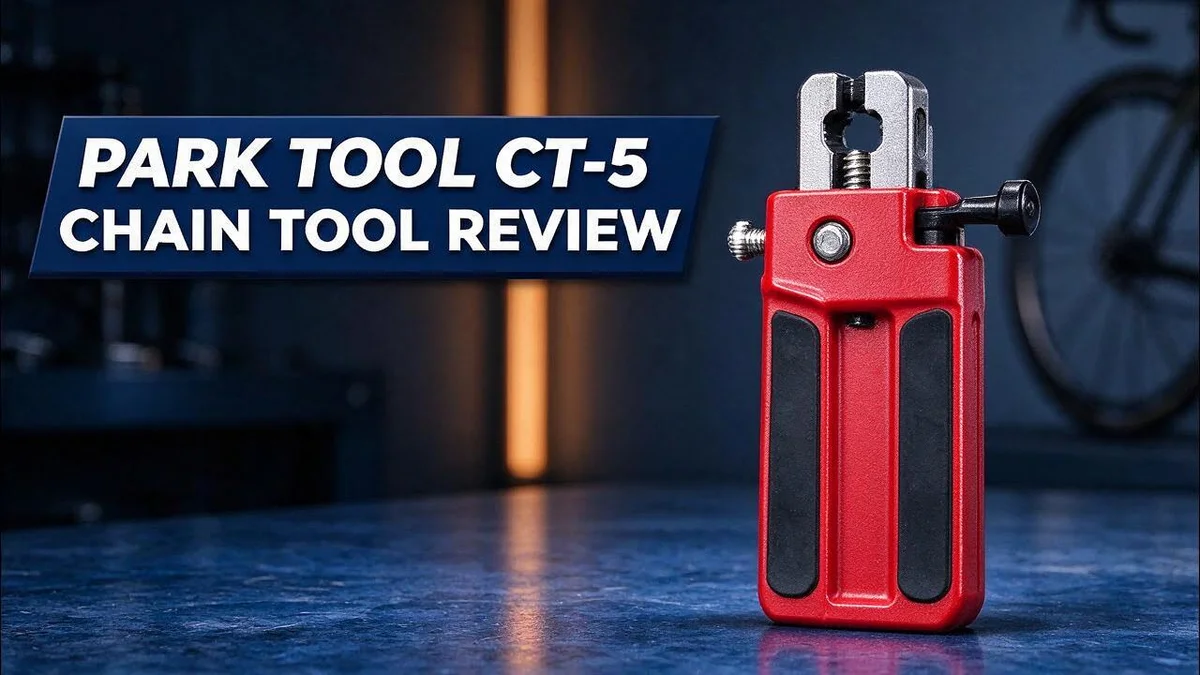
The Park Tool CT-5 Chain Tool is a simple chain breaker. It forces a pin out of a link or pushes it back in. It fits 1/8 inch single-speed chains and most 5 to 12 speed derailleur chains.
One review says it works very well, even without a live centre. It also has a handy shelf for loosening tight links. The pin is replaceable, so you can keep using the tool for repairs.
Is it the right pick for you? This guide explains what the CT-5 offers, where it shines, and where it falls short. You will also see how it compares with other popular options.
In a Nutshell
- Main job: The CT-5 forces a pin out of a link or pushes it back in. This lets you split or rejoin a chain during repairs.
- Chain fit: It works with 1/8 inch single speed chains. It also fits most 5 to 12 speed derailleur chains, so many bikes are covered.
- Handy shelf: A built in shelf helps you loosen links that feel tight. You can ease a stiff link before you push the pin out.
- Replaceable pin: The pin can be swapped out when it wears down. You do not need a whole new tool when parts age.
- Best setting: The CT-5 suits home mechanics and part time shop work. Riders who fix their own bikes will find it dependable for regular jobs.
- Trade off: Some riders find it less convenient than a dedicated chain tool. It also has no live centre, so setup takes a little patience.
Chain Breaking Performance

- Compatible with 1/8” single-speed and 5 to 12-speed derailleur chains*
- Shelf for loosening tight links
Last update on 2026-11-27 / Affiliate links / Images from Amazon Product Advertising API
You turn the handle slowly, and the pin moves in a straight line. Each turn feels smooth and controlled.
Slow turns beat fast force. Rushing can bend the link plates. Smooth pressure keeps the chain round and ready to ride.
Alignment matters more than strength. Seat the chain firmly so the pin lines up with the link. A crooked start often leads to a stiff link.
Check the pin often. Push only until the outer plates sit even. Pushing too far can leave a tight spot that binds the drivetrain.
Many riders test the pin depth with a finger. A link that flexes freely usually means the pin sits right.
The tool works best on clean, dry chains. Grit can hide the pin line and make the press feel uneven. A quick wipe saves time.
Without a live centre, the chain needs extra support. Hold the chain steady with your free hand. This keeps the pin from wandering.
Practice on an old chain first. A test run builds feel for pin pressure. Most riders learn the rhythm after one or two tries.
Chain type also shapes the results. Standard derailleur chains respond well to this method. Narrow or heavily worn chains may need extra care.
For a home workshop, consistent results count most. This tool gives repeatable cuts when you follow the same steps each time. That consistency builds confidence on every repair.
Edge cases also matter. Older chains with stubborn pins take more time. Patience helps you avoid damage to the links.
Finish each break with a quick check of the link. Look for a clean edge and no bent plates. A good result makes the next step easier.
Overall, the chain breaking performance feels reliable for everyday tasks. Careful technique gets the best outcome from this tool. Keep the tool clean after each use so it stays accurate.
Compatibility Across Chain Types
Chain compatibility decides whether the CT-5 fits your job. Before you press anything, check your chain and gear setup.
Start by counting the gears on your bike. The number of cogs on your rear cassette shows the speed count you need.
Most derailleur chains fall between 5 and 12 speed. The CT-5 is built for that range, so most common chains work well.
Narrower chains need a lighter touch. Chains get thinner as the speed count rises. A 12 speed chain has tighter plates than a 7 speed chain.
Many chain makers print the speed on the box or the outer plates. Read that label before you start the tool.
Single speed chains use a different width than multi gear chains. Measure the width with calipers if you feel unsure.
Quick links join differently than riveted links. Forcing a pin through a quick link can damage the plates.
Check the pin seat on hollow or coated chains. Special finishes can change how the pin feels, so go slowly.
Watch for mixed parts. Some riders combine chain brands or speeds on one bike. Mixed parts can wear faster and need a closer look.
Worn chains can also cause trouble. A stretched chain may not sit square in the tool, so measure wear with a chain checker first.
Ask a shop if you feel unsure. A local mechanic can confirm the width and speed in a few minutes, which saves time and frustration.
Bike brands often mix parts from different groups. Check the chain against the cassette and chainrings, not just the bike name.
Compatibility also affects how often you use the tool. A bike with one chain type gives steady results, so you learn the feel faster.
Keep a note of your chain type for future repairs. Write down the speed count and width on a card in your toolbox. Future you will thank you.
Chain compatibility is simple once you know your setup. Match the speed count, check the width, and confirm the link type every time.
Build Quality and Replaceable Parts
Build quality shapes how long the CT-5 stays useful in your workshop. Every chain break puts pressure on the frame and the pin.
The CT-5 treats the pin as its main wear part. This design lets you keep the frame in service while you swap a tired pin. Think of the pin as the piece you plan to replace.
Keep a spare pin in your toolbox. A worn pin can mark the plate, push unevenly, or slip under load. Having a replacement ready stops a small problem from stalling your whole job.
Inspect the pin tip after every few uses. Look for flat spots, chips, or rounded edges. If the tip looks damaged, change it before you start the next link.
Threads need regular care too. Wipe away grit with a dry cloth before each session. Grit wears threads faster than most people expect. A light coat of grease helps the handle turn smoothly and protects the metal.
Storage matters more than many owners realize. Moisture invites rust on exposed steel. Keep the tool in a dry drawer or a small case lined with cloth.
Check the frame after heavy use. Look for bends near the body, cracks around the pin housing, or any gap that was not there before.
Stop using the tool for chain work if the frame looks bent. A damaged frame can push pins at the wrong angle and damage good chains.
Parts also need a good record. Write down the date you changed the pin. This simple habit shows when the tool needs attention and helps you spot patterns.
Replacement parts are easiest to find when you know the exact model. Check the label or manual before you order. Parts lists can change between versions, so a quick check avoids the wrong fit.
A well kept CT-5 can serve a home mechanic for many seasons. Regular cleaning, a spare pin, and simple checks keep the tool accurate. Good habits turn a basic chain breaker into a dependable helper. Small care steps add up over time.
Top 3 Alternatives
Looking for a chain tool that fits your bike kit? These three options work well for most riders. Each one offers a different feel and useful features.
Park Tool CT-3.2

- Comfortable T-handle
- Investment cast steel body
Last update on 2026-11-27 / Affiliate links / Images from Amazon Product Advertising API
The Park Tool CT-3.2 is a simple choice for home riders. It works well on most common chains. Many people like its compact size and easy grip.
It pushes pins out and back in with little effort. This makes it a good pick for quick roadside fixes. Its simple steps make the process quick. Beginners often find it easy to learn.
Pedro’s Chain Tool

- The Shop Chain Tool is a workhorse designed to make chain removal, installation, and adjustments simple, safe, and...
- Replaceable bridge and adjustable positioning fit all current and future chains up to 13-speed and beyond
Last update on 2026-11-27 / Affiliate links / Images from Amazon Product Advertising API
Pedro’s Chain Tool offers a light and clean design. It fits nicely in a saddle bag or jersey pocket. The tool handles both single speed and multi speed chains.
The threaded pin guide keeps the chain steady during work. This helps reduce mistakes. Many riders keep one in their backpack for long rides. Riders who carry a tool every day often choose this model.
Topeak Chain Tool

- All-in-One Functionality – Features 6 essential functions including chain tool, hook, pin breaker, mini hammer...
- Durable CrMo Steel Construction – Precision-forged from chromoly steel for superior strength and long-term...
Last update on 2026-11-27 / Affiliate links / Images from Amazon Product Advertising API
The Topeak Chain Tool brings a sturdy build and a helpful bit set. It works on many chain widths. Its handle gives you good leverage.
You can also use it for quick chain checks. Some models include a chain wear indicator. This helps you know when to replace parts. Its clear markings help you line up the chain.
Home Workshop Use and Technique
A clean and well-lit workspace makes the CT-5 easier to use. Pick a sturdy bench near a bright lamp. Good light shows the pin tip and the link plates clearly.
Mount the tool in a bench vise or clamp it to a flat surface. A steady base stops the handle from wobbling. Place a rag or drip tray under the chain to catch oil and small metal bits.
Gather everything before you start. Lay out the CT-5, a spare pin, a quick link, and a pair of safety glasses. A pin can pop out with force, so eye protection matters most.
Think about the layout too. Keep a magnetic tray or a small cup for pins and clips. Small parts roll away fast on a cluttered bench, and a tray keeps them in sight.
Work on one chain at a time. Mixing parts from two bikes causes confusion later. Label each removed chain with the bike name and the date so you can track its history.
Temperature also changes how the work feels. Cold metal can feel stiff, so warm the room before you begin. Steady conditions make the pin move more predictably under your hand.
Take short breaks during longer jobs. Tired hands can rush a push, and rushing leads to mistakes. A pause helps you return with a calmer grip and steadier turns.
Keep a simple maintenance log. Note the chain type, the number of links removed, and the date. Over time, this record shows wear patterns and helps you plan service before a chain fails on the trail.
When you finish, wipe the bench and return the tool to its spot. A tidy finish makes the next session faster and keeps your home workshop ready for the next repair.
Pros and Cons
Pros
- Works very well even without a live centre.
- Gets everyday chain repairs done with one simple tool.
- Suits a home mechanic who fixes chains now and then.
- Fits a part time shop that needs a dependable tool.
- Feels straightforward once you know the basic steps.
Cons
- Feels less convenient than a dedicated chain tool.
- Has no live centre, so lining up the pin takes extra care.
- Can slow you down on a busy day with many chains.
- Beginners may need some practice to get clean results.
Who Should Buy It
The Park Tool CT-5 fits several types of riders. Some people need it more than others, so your riding habits and maintenance routine matter.
Daily commuters can benefit a lot. A chain wears out faster under daily miles, so a reliable breaker keeps a simple repair from becoming a long delay.
Weekend trail riders also make good buyers. Mud, grit, and rain can cause sudden chain problems, and a tool that fits in your bag makes trailside fixes easier.
Families with several bikes often save time with this tool. One breaker can handle kids’ bikes, adult bikes, and a spare cruiser without extra gear for each one.
Community workshop volunteers may appreciate it as well. Shared tools take heavy use, and a simple breaker that stays in good shape keeps the bench running for everyone.
New riders building a first toolkit can use the CT-5 as a learning tool. Practicing on an old chain helps you understand how pins move before you work on your main bike.
Who might look elsewhere? Riders who service chains every day may want something faster. A busy shop with a steady stream of customers often needs a tool that speeds up each job.
Riders with mixed chain types benefit too. Bikes with different drivetrains need a breaker that handles common chain sizes, and this tool covers most chains found on modern bikes.
Think about your own routine before you decide. Ask yourself how often chains need work each month. If the answer is occasionally, this tool covers the job well. If the answer is constantly, a second option may serve you better.
Still unsure? Look at how many bikes you maintain, how far you ride, and how comfortable you feel with small parts. Those three answers usually point to the right choice. The CT-5 suits anyone who wants one dependable tool that does its job well.
Final Verdict
The Park Tool CT-5 is a solid pick for riders who want a simple way to fix chains. It does the job well. Most riders feel confident using it after a few tries.
The tool pushes pins out and pulls them back in. It fits single speed chains and most 5 to 12 speed chains. That range covers many bikes people ride today.
The real strength is versatility. One tool can handle a mix of bikes in one home. You do not need a separate tool for each chain type. That saves space on your bench.
Think of the CT-5 as a long term companion. Park Tool has a strong name for tools that last. A well kept tool can serve you for many seasons.
Practice on an old chain before a real repair. This builds confidence and helps you learn the feel of the tool. Clean results come with time.
The tool also teaches good habits. You learn to check each link as you work. That attention helps you spot worn chains early.
Storage matters too. Keep the tool in a dry spot with your other chain tools. Rust can slow down a good tool over time.
Some riders may want a spare pin on hand. Replacing a worn pin keeps the tool working as it should. Plan this before your next big ride.
Our final thoughts: The CT-5 suits home mechanics and part time shops alike. It gives steady results with minimal fuss. Riders who want a reliable tool will likely be happy with their choice.
Before you buy, ask a few simple questions. How many bikes do you care for? Do you work on one chain type or many? Your answers will point you to the right choice.
In short, the CT-5 is a practical tool worth a place on your bench. Overall, it earns a confident thumbs up from most users.
Frequently Asked Questions
Which chains fit the Park Tool CT-5?
The CT-5 works with 1/8″ single speed chains and most 5 to 12 speed derailleur chains. That range covers the bikes most riders own today, so you can use one tool across different setups.
Can the CT-5 loosen stiff links?
Yes. The tool has a shelf that helps you loosen tight links before you push a pin out. Use the shelf first if a link feels stuck, because forcing it can damage the chain.
Is there a more compact option?
Yes. The BIKE-RX is a compact choice for riders who want something small to carry on rides. Pedro’s Apprentice and the Birzman Damselfly Universal Chain Tool are also worth comparing if you want a different style of tool.
Should I choose the CT-5 or the CT-3?
Both come from Park Tool, and the CT-3 is often cited as long lasting. The CT-5 is a good pick if you want a tool that handles both pushing pins out and pulling them back in. Compare how often you fix chains before you decide.

Virat is the founder and lead writer at ActivePlayFinds.com, where he shares honest, in-depth reviews, comparisons, and buying guides to help athletes and sports enthusiasts find the perfect gear. With a deep passion for sports and hands-on experience testing a wide range of products, he is committed to helping readers make smart, confident buying decisions.